Ask about this project
AI Recommended Workflow — Agentic Workflows
Agentic Workflows

Agentic Workflows — Response Automation.

C3.ai — Document intelligence and workflow system for response automation.

Role Lead Product Designer
Category Enterprise AI Platform
Year 2026
Scope Product Design & UX Strategy
Context Enterprise AI Platform — C3.ai
Year 2026
Role
Lead Product Design AI/UX Strategy Interaction Design System Design
Designed For
Document Intelligence Workflow Automation Response Generation
Visit Website

Redesigning how structured understanding could emerge from unstructured input.

At C3 AI, many pilot and early production customers relied on the Agentic Workflows platform to automate operational processes whose final outputs were not dashboards or predictions but formal business documents such as quotations, compliance reports, and statements of work.

Among these, Request for Quotation responses represented one of the most time-consuming and error-prone categories because every incoming document varied in structure, terminology, and completeness while still requiring an accurate, professional, and legally sound reply.

Clients were receiving hundreds of RFQs annually, and each submission forced sales engineers to read lengthy attachments, manually extract technical requirements, reconcile units, verify feasibility with internal data, and then craft a response that balanced warmth with precision.

The opportunity was therefore not merely to generate text faster but to redesign how structured understanding could emerge from unstructured input, how confidence in that understanding could be communicated, and how non-technical operators could supervise AI without becoming prompt engineers.
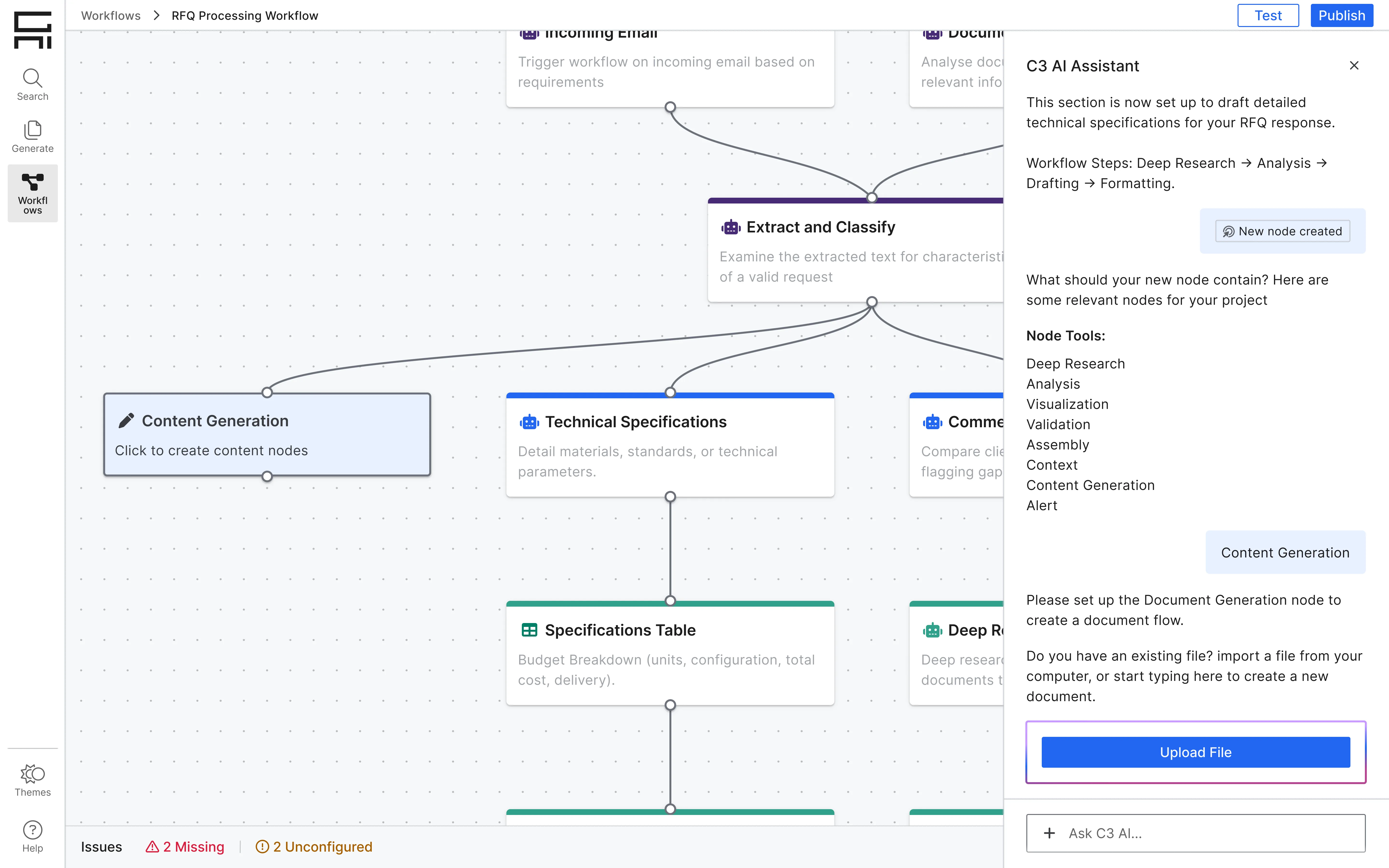
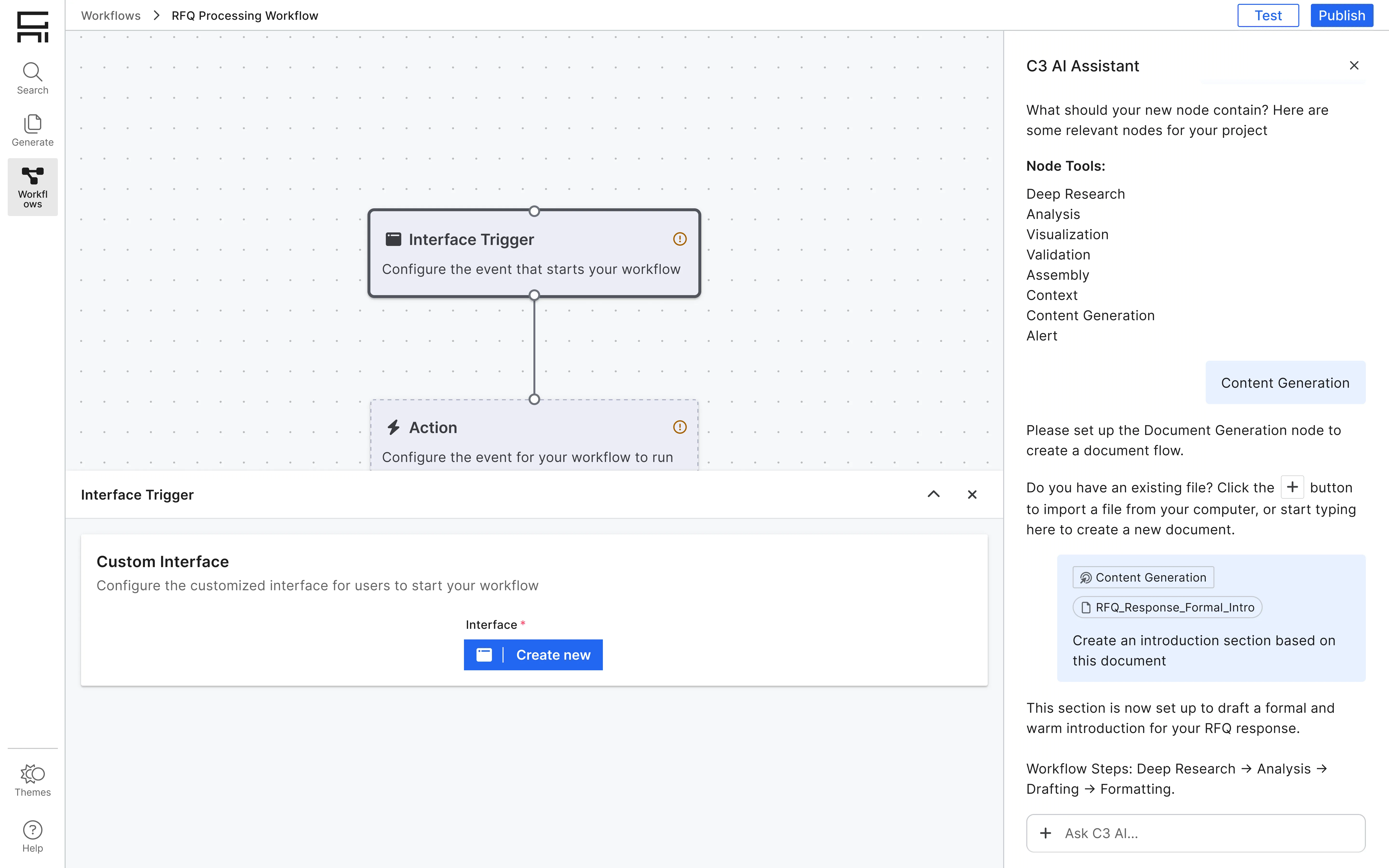
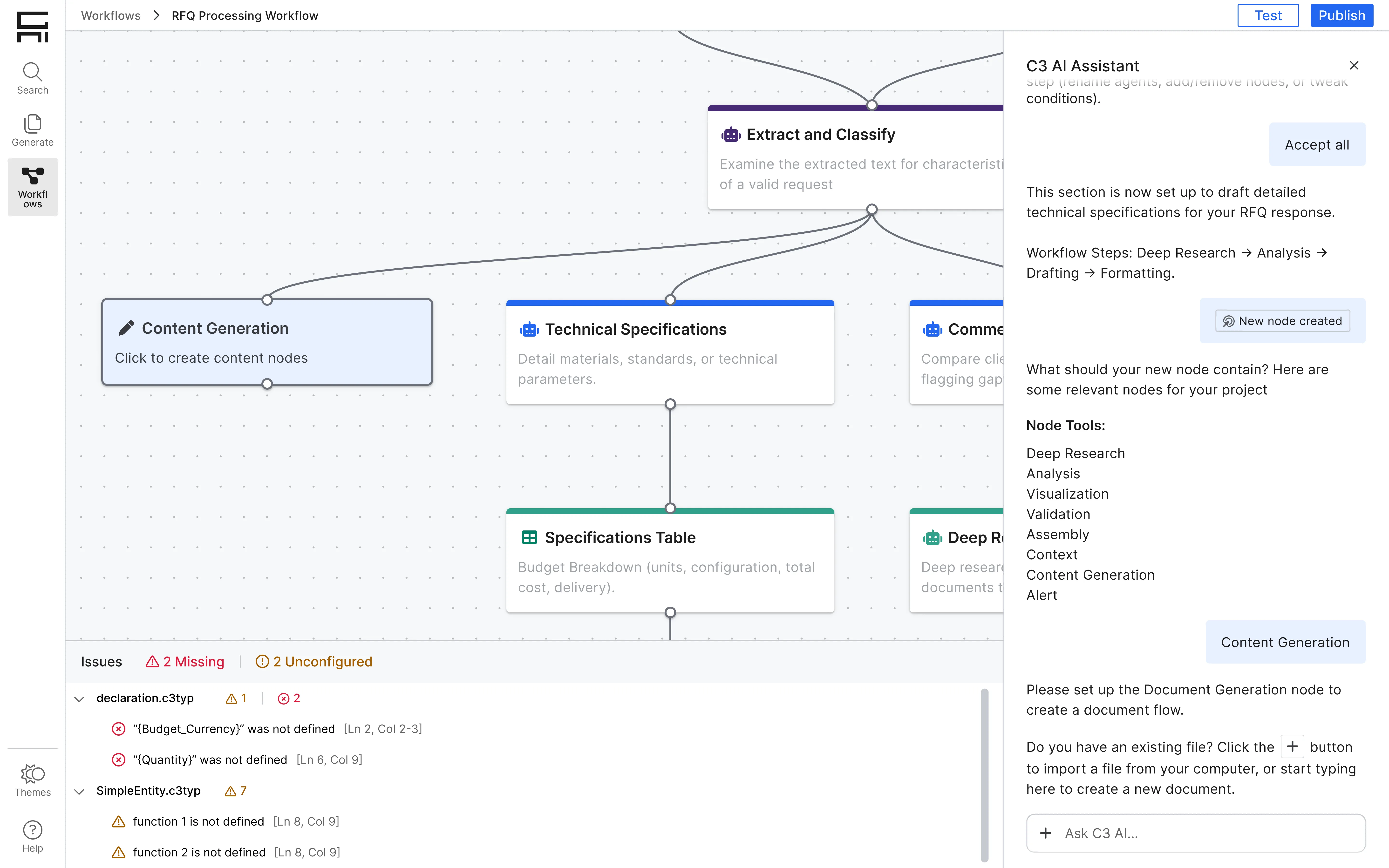
Building Workflow — Node-based workflow construction
Click to preview

Making complex automation legible to everyday users.

I led product design for the end-to-end experience spanning document ingestion, AI extraction, validation logic, narrative composition, and human review. Because the initiative touched platform infrastructure, applied AI, and customer-facing communication standards, my role required continuous alignment with product management, solution architects, and field teams while also translating stakeholder expectations from executives who evaluated success in terms of scalability, auditability, and contract velocity.

Weekly reviews with senior leadership meant that design artifacts had to operate simultaneously as prototypes, specifications, and strategy arguments. I was responsible for defining interaction models that would make complex automation legible to everyday users, creating the mental framework for AI blocks and variables, and ensuring that every stage of the workflow produced observable outputs that could be tested, trusted, and refined.

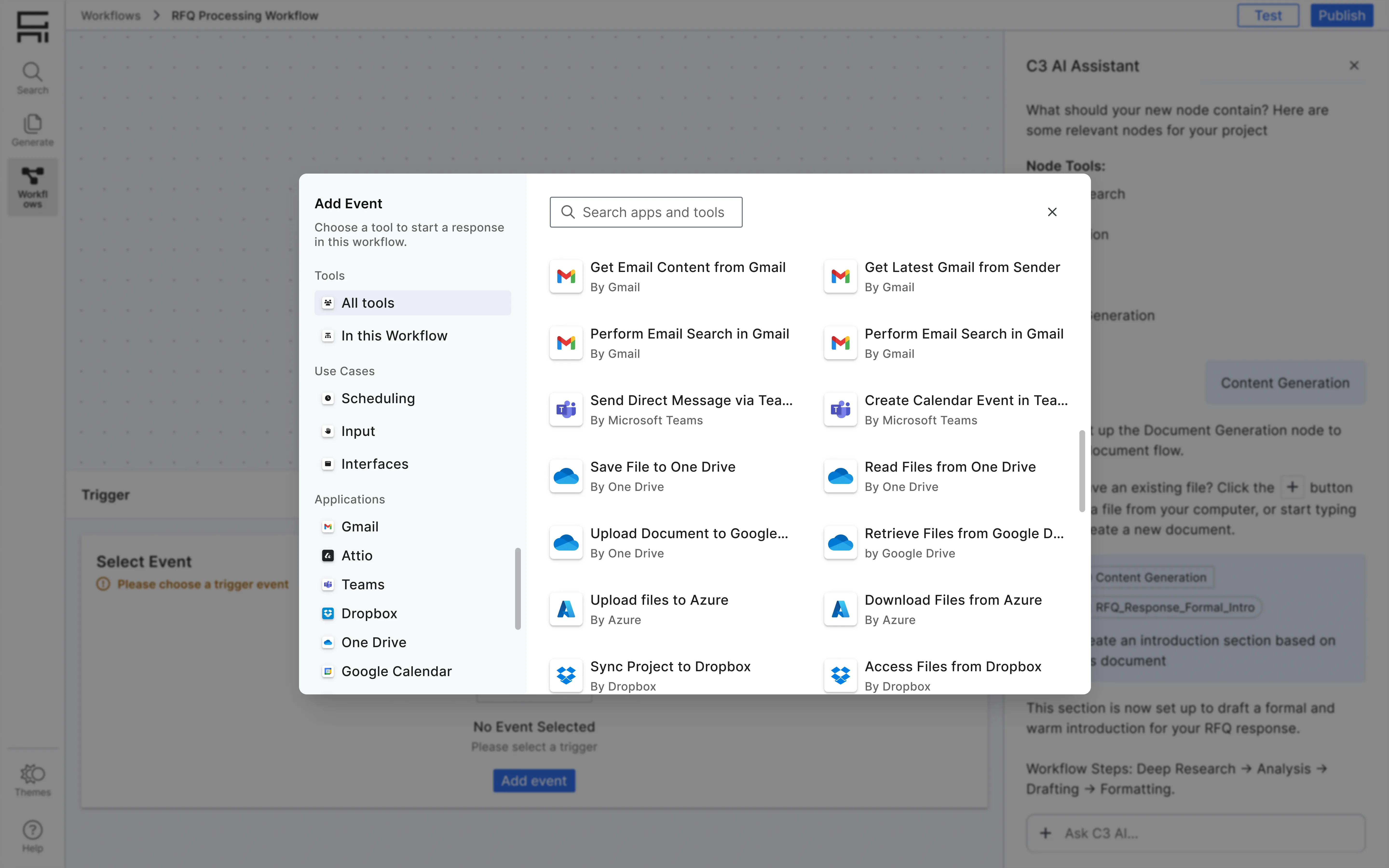
A critical limitation in early automation experiments was that even beautifully drafted responses were only as reliable as the information immediately present in the RFQ, which meant users still had to leave the system to confirm pricing logic, product availability, historical quotes, or contractual constraints. To address this gap, I helped define the experience layer for integrating Model Context Protocol style connectors, enabling the workflow to securely retrieve and reason over enterprise data sources without exposing that complexity to the operator.

MCP and Connectors — Enterprise data source integration
Click to preview
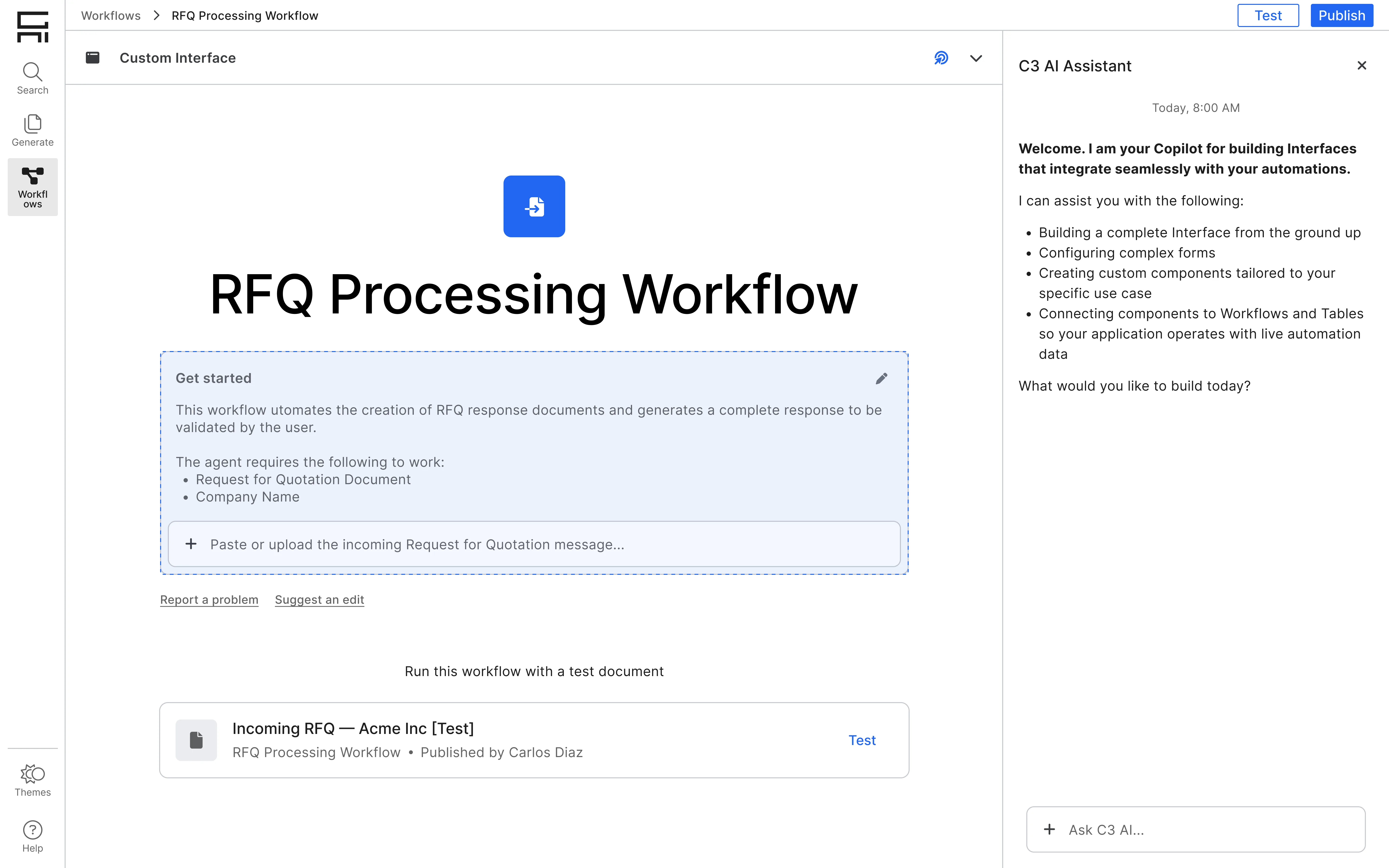
Creating Interface — Workflow creation experience
Click to preview

Documents not as static files but as evolving containers of state.

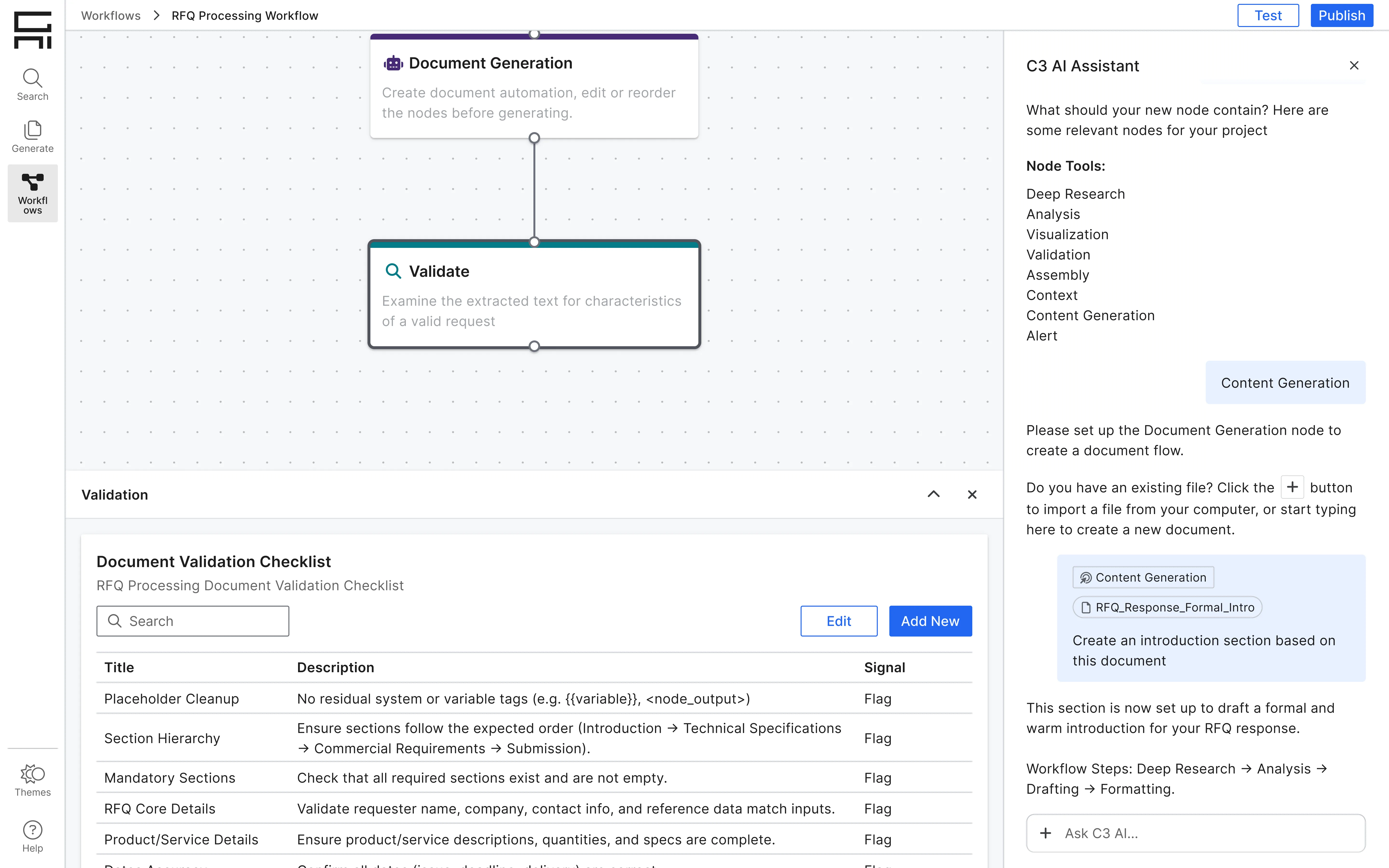
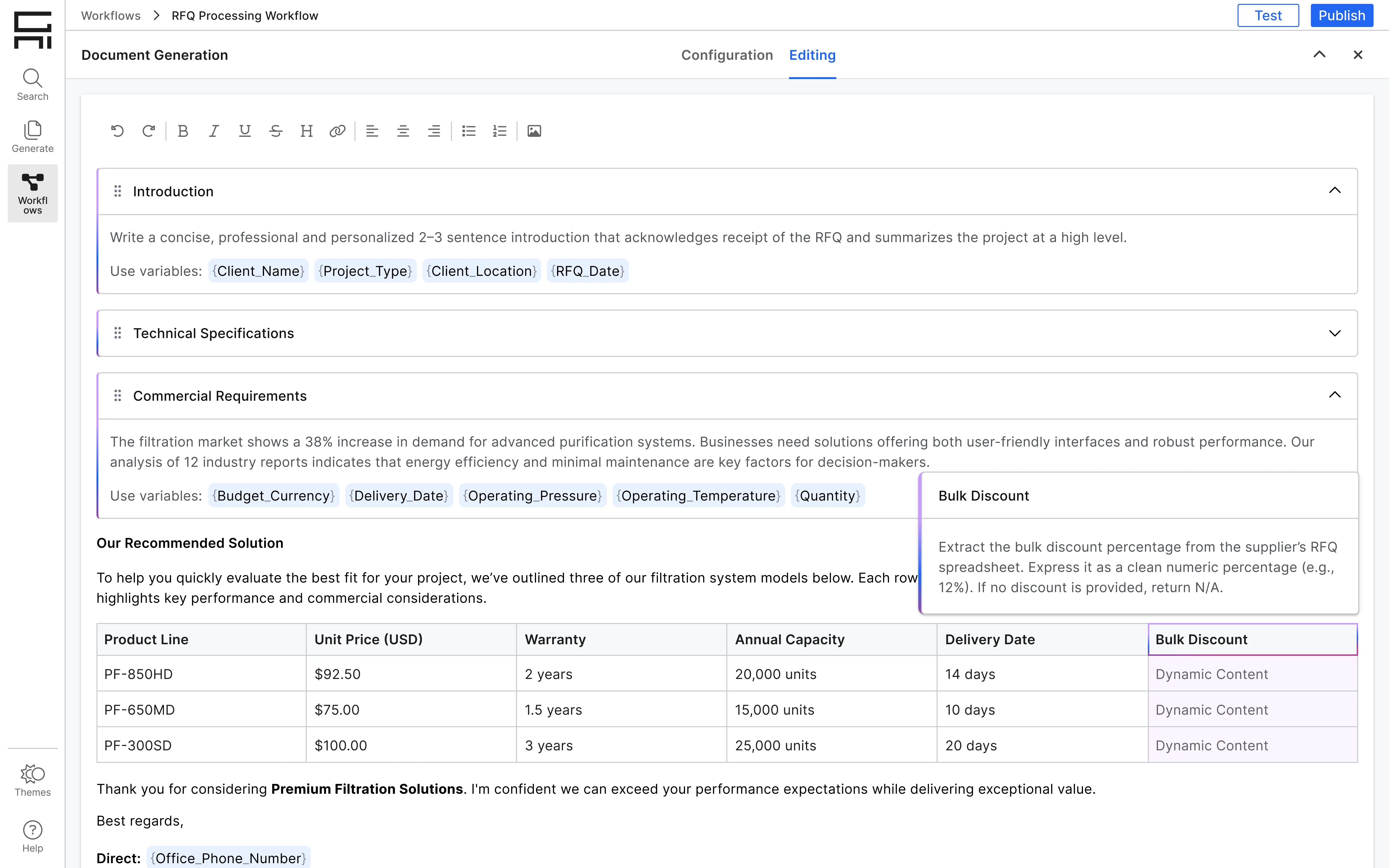
The core shift in my approach was to treat documents not as static files but as evolving containers of state that travel through a series of transformations, each transformation increasing clarity, reliability, and readiness for external communication. Instead of hiding the AI behind a single "generate" action, the strategy decomposes the process into nodes such as intake, extraction, validation, conversion, composition, and review, allowing users to see how meaning accumulated and where intervention might be necessary.

A defining decision was to privilege progressive disclosure over configurational density, which meant the everyday interface acted as a readable window into system behavior while advanced tuning lived behind modal layers for specialists. This separation allowed new users to operate the workflow safely while still giving experts the power to adjust prompts, thresholds, and mappings when edge cases demanded it.

Validation — AI extraction verification and confidence scoring
Click to preview
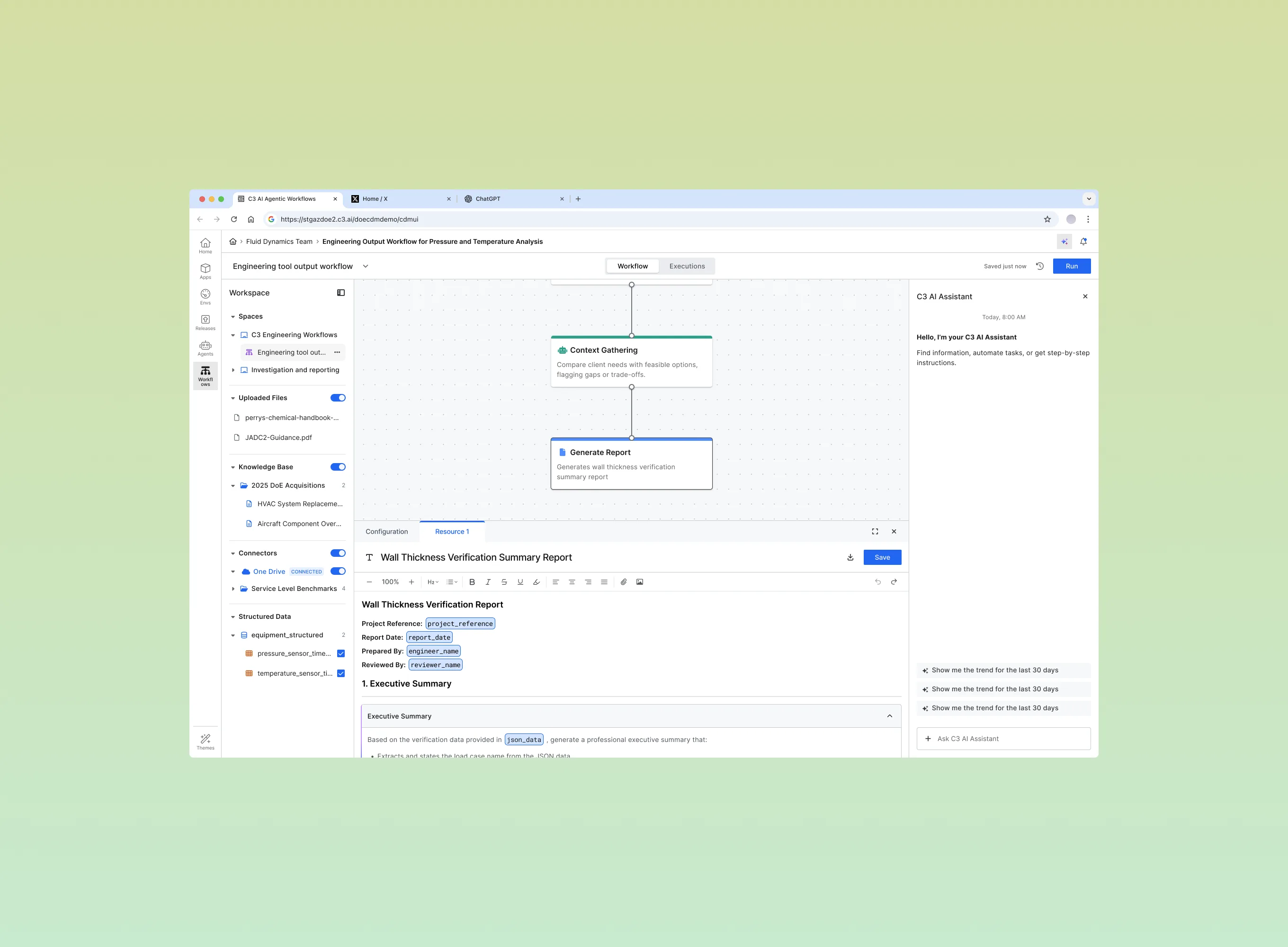
Document Generation — Dynamic content composition
Click to preview

Scaling from hundreds of RFQs per year toward thousands.

Although the product continued to evolve, the framework enabled teams to imagine scaling from hundreds of RFQs per year toward thousands by reducing manual interpretation time and standardizing quality across responses.

From a design leadership perspective, the project demonstrated my ability to operate in ambiguity, synthesize technical and commercial requirements, and construct systems that make advanced capabilities usable by people who simply want to get their jobs done well. It also strengthened cross-functional trust, since partners could see their constraints reflected in the interface rather than abstracted away.

Agentic
Workflow Automation Node-based decomposition from intake to review with observable outputs
MCP
Enterprise Connectors Secure retrieval from enterprise data sources without exposing complexity
Scalable
Response Generation From hundreds of RFQs annually toward thousands with standardized quality
Editing through AI Agent — Human review and refinement
Click to preview
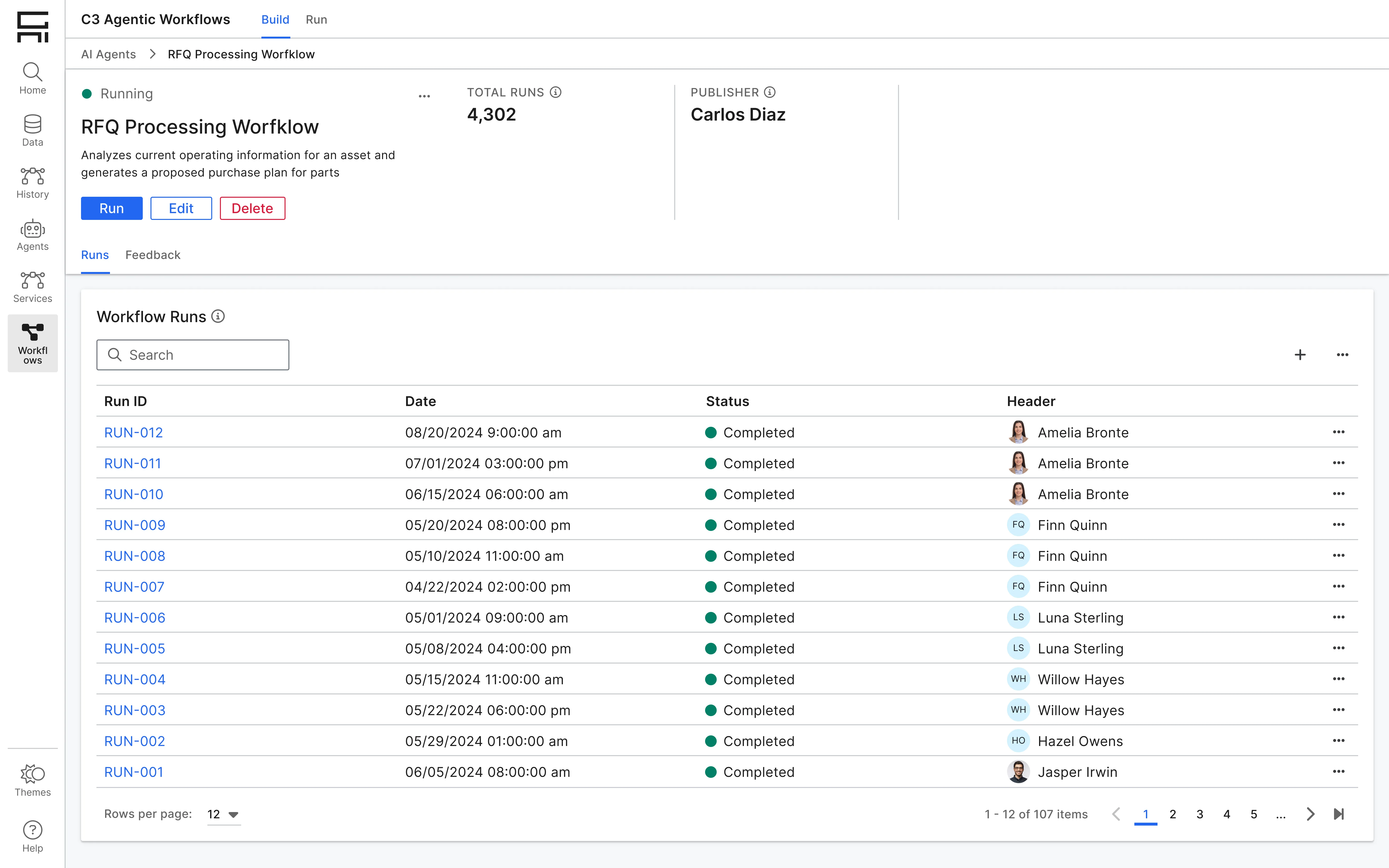
Workflow Runs — Execution monitoring and history
Click to preview
Issues and Errors — Error handling and debugging interface
Click to preview
Noetica
Next Project

Noetica