Ask about this project
Federal Procurement Landing Page
Federal Procurement

AI-Assisted Federal Procurement Evaluation.

C3.ai — Designing an AI-assisted evaluation platform for federal contracting.

Role Lead Product Designer
Category Federal AI Platform
Year 2026
Scope Product Design & UX Strategy
Context US Department of Energy
Year 2026
Role
Lead Product Design AI/UX Strategy Interaction Design Information Architecture
Designed For
Federal Contracting Officers Source Selection Evaluation Regulatory Compliance

Any system that attempts to replace judgment rather than support it is immediately rejected.

Federal source selection is one of the most procedurally rigid and highly scrutinized decision environments in enterprise software, because contracting officers must evaluate complex vendor proposals against pre-defined solicitation criteria while producing documentation that can withstand legal protest, audit review, and executive oversight.

Although artificial intelligence is frequently positioned as a mechanism for automation, the reality inside acquisition organizations is that authority, accountability, and responsibility remain firmly human, which means any system that attempts to replace judgment rather than support it is immediately rejected by users.

My work for this project was to design how proposals are reviewed in the US Department of Energy by creating an AI-assisted evaluation environment capable of reading vendor submissions, identifying alignment or gaps relative to the solicitation packages needed, and helping contracting professionals move faster without undermining regulatory requirements.
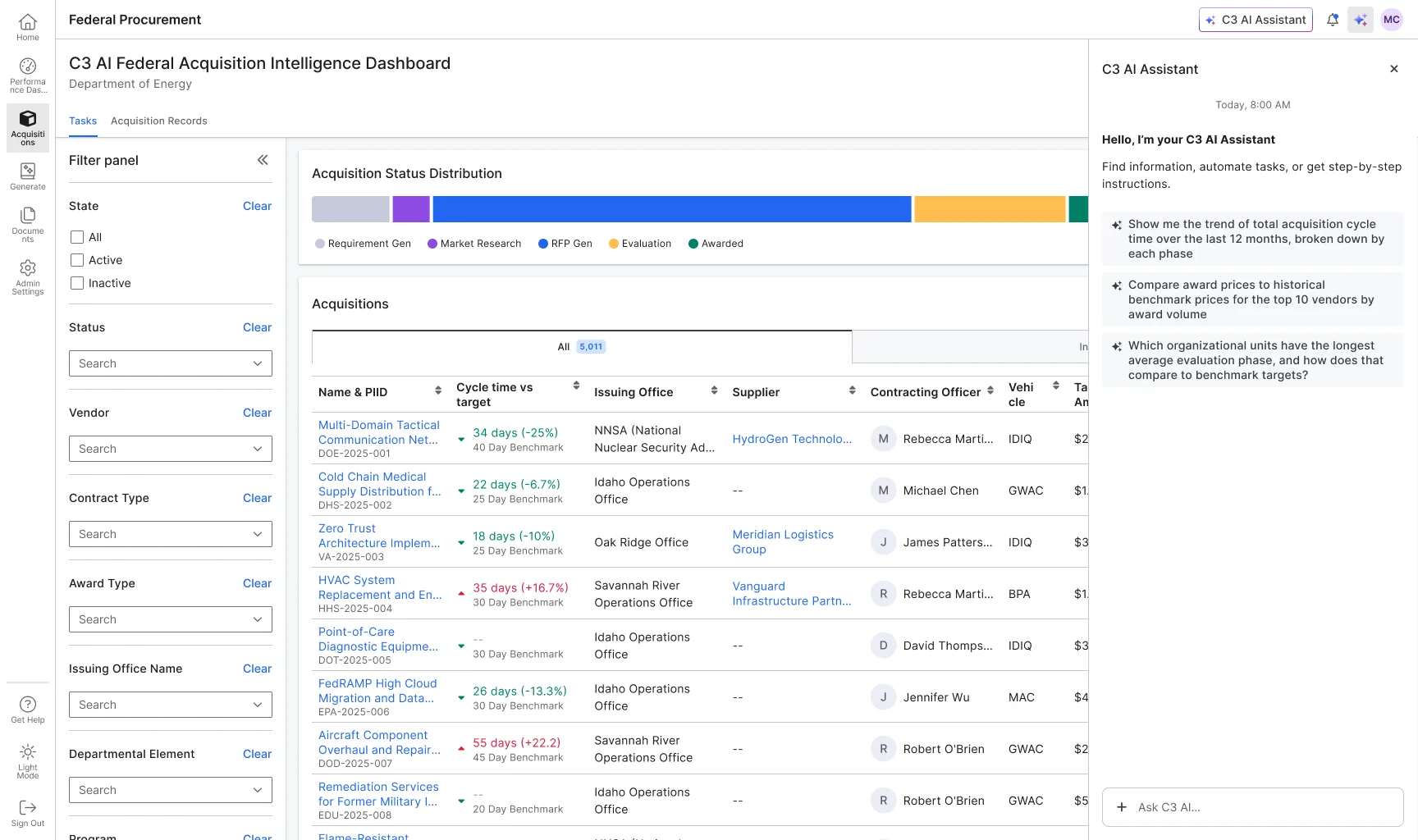
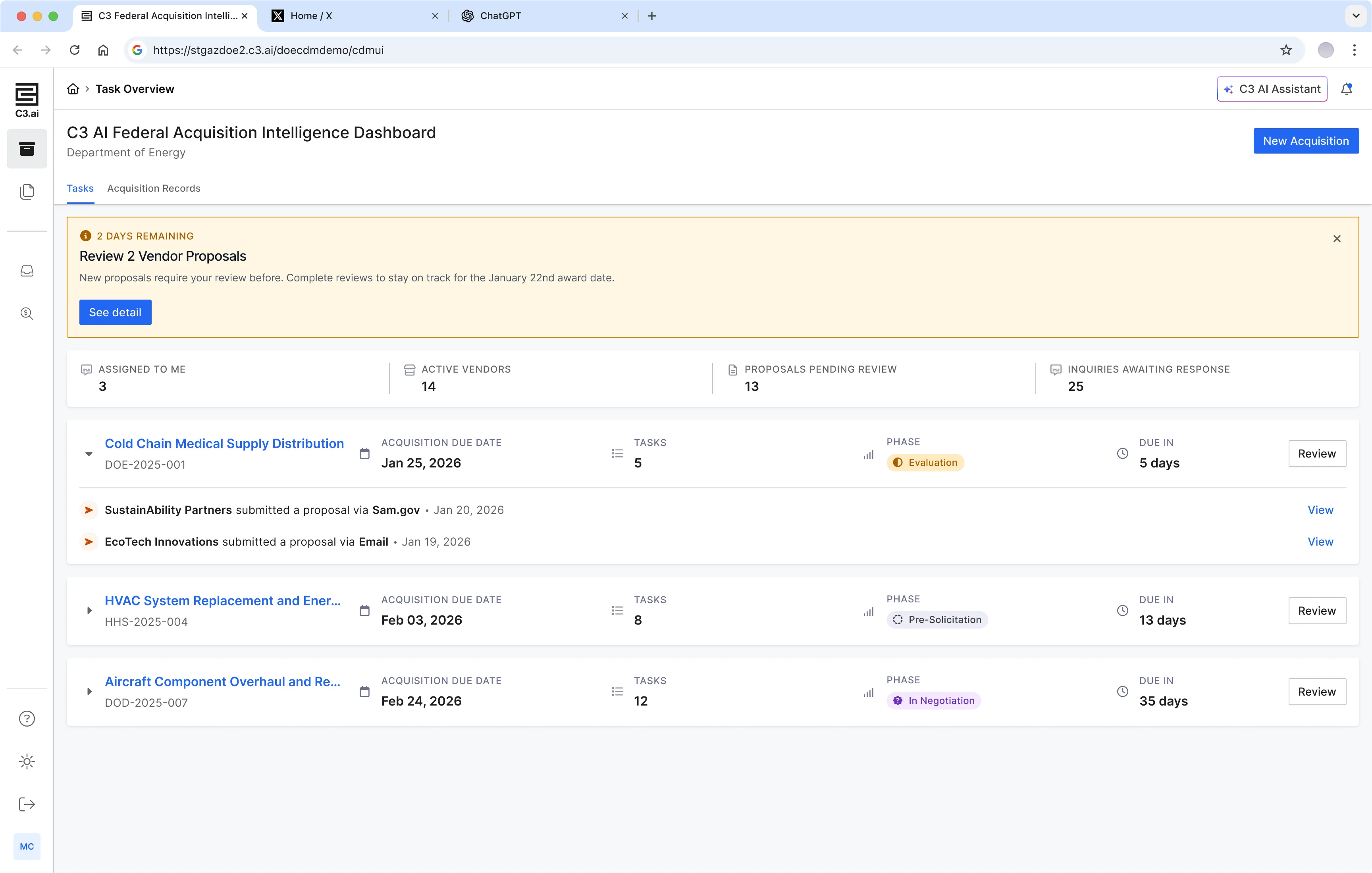
Intelligence Dashboard — Federal procurement evaluation overview
Click to preview

Different participants operate in separate but interconnected responsibilities.

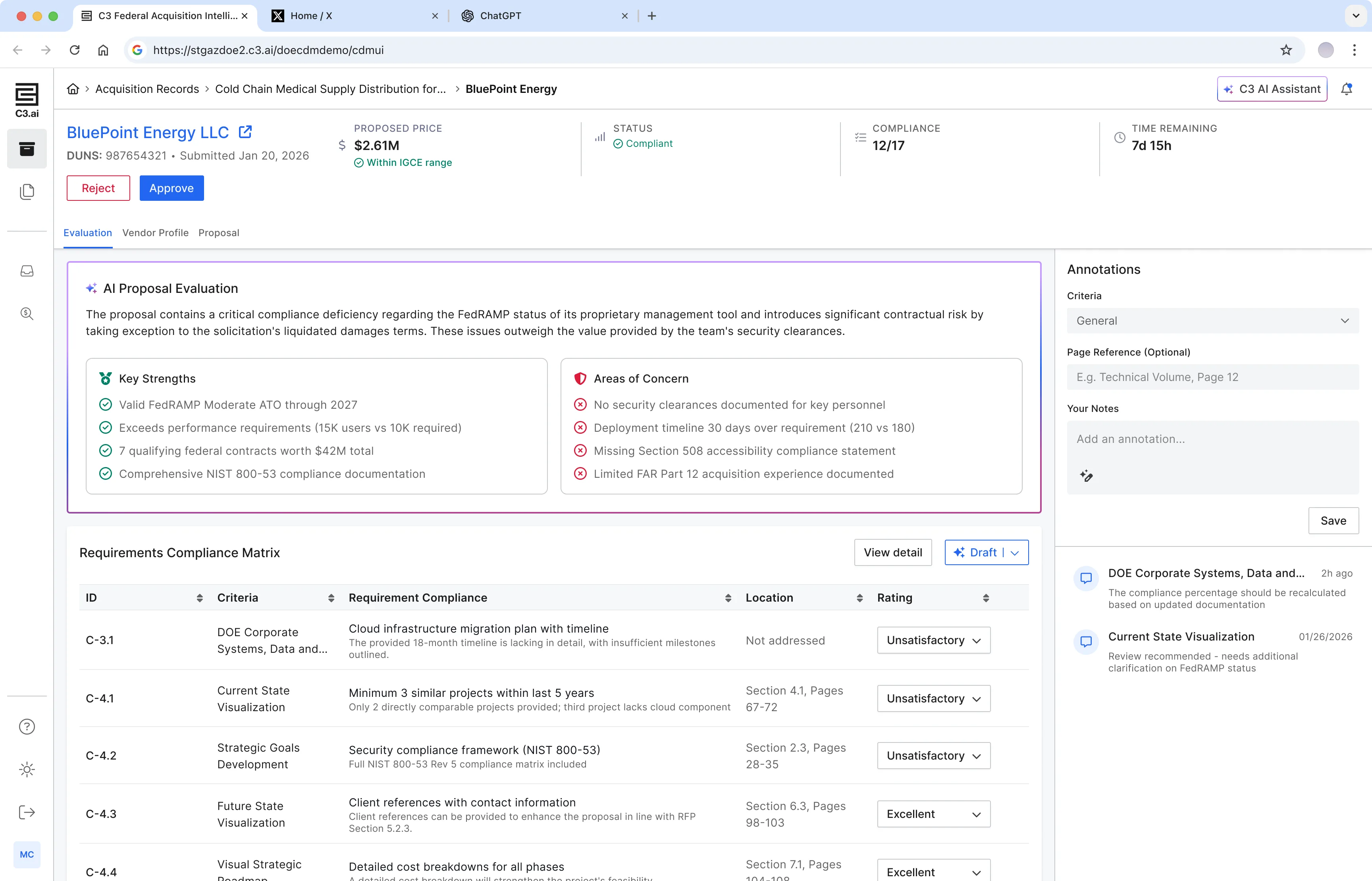
Because visibility rules in federal procurement are tightly controlled, the evaluation portal needed for proposal reviews had to reflect the fact that different participants operate in separate but interconnected responsibilities. Contract specialists and contracting officers conduct compliance reviews against submission instructions, technical representatives assess alignment with performance requirements, and pricing personnel determine whether offers are fair and reasonable relative to government estimates.

Overall, senior authorities then rely on outputs from those groups to construct award decision documentation.

Rather than collapsing these perspectives into a single monolithic experience, the design introduced dedicated but harmonized workspaces where each group could focus on its mandate while still contributing to a shared body of evidence.

AI functions within those spaces as an assistant capable of referencing the solicitation, other proposals, repository documents, and historical vendor data, yet it respects permission boundaries and never exposes information outside the user's authority. This separation increased trust because it aligned with real governance structures while still enabling the eventual aggregation of insights necessary for source selection.

Contracting Officer Dashboard — Role-based evaluation workspace
Click to preview
Compliance review interface — Submission instruction validation
Click to preview

Not automation of judgment but acceleration of understanding.

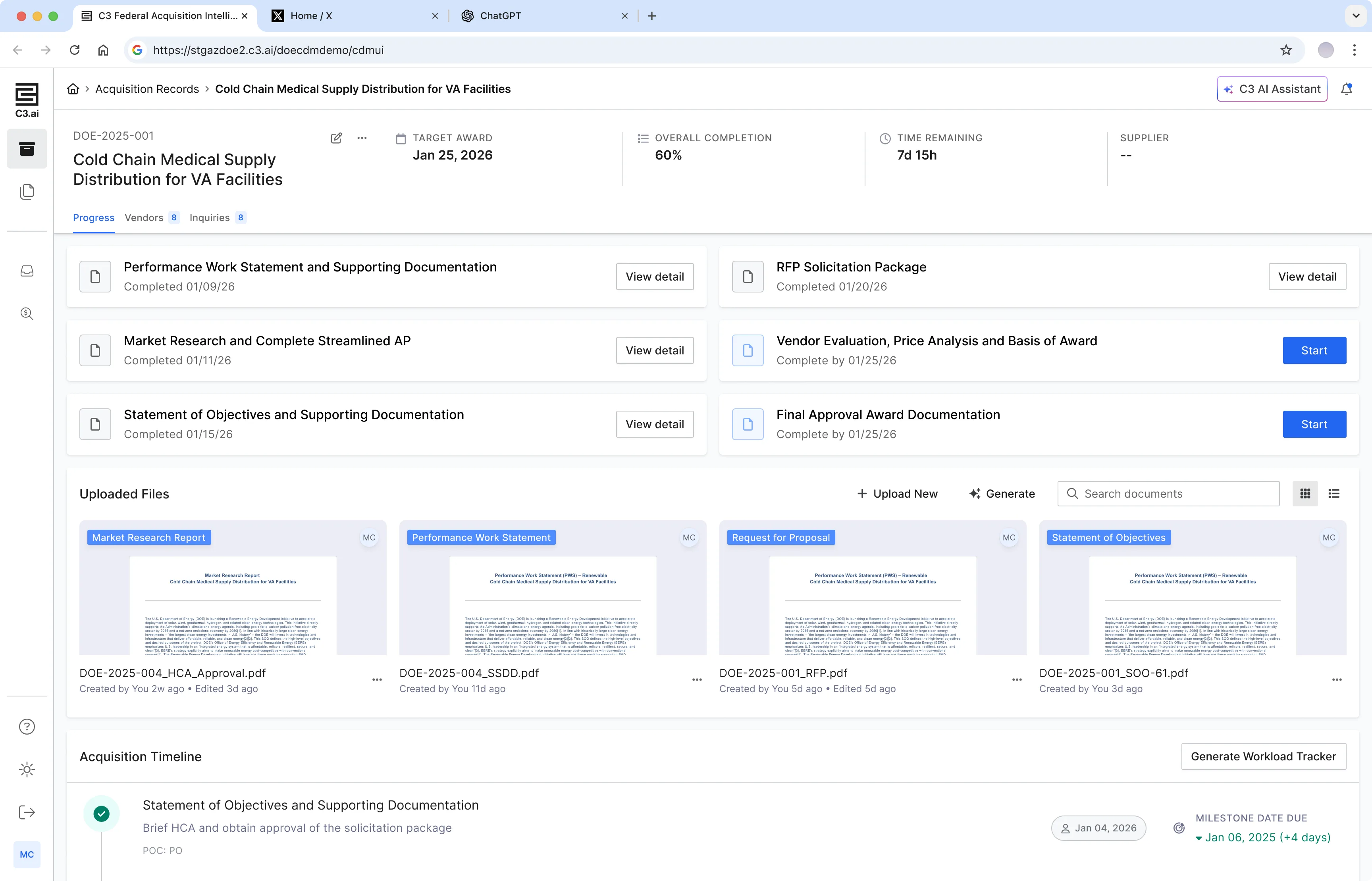
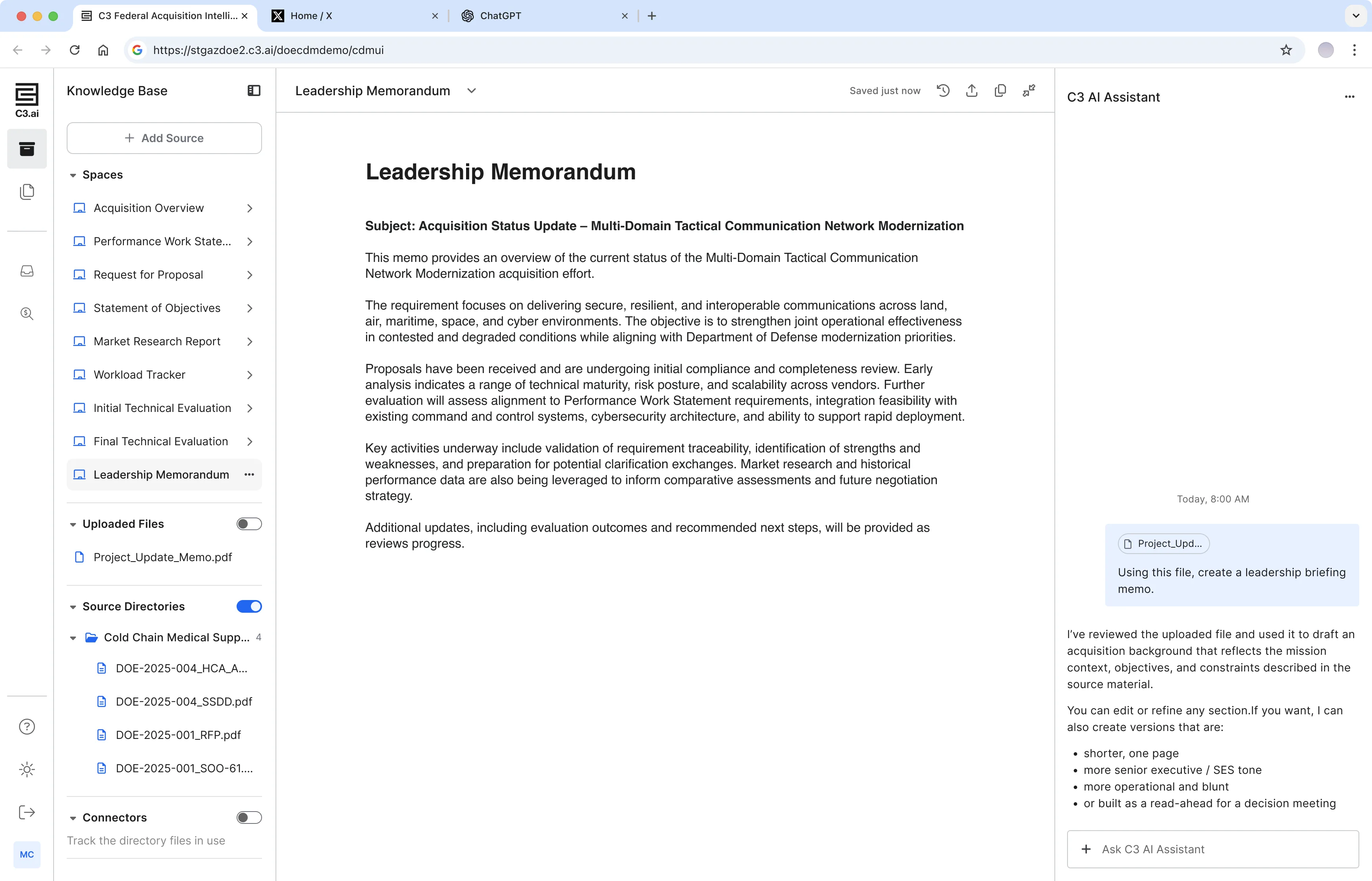
The ultimate measure of success for the system wasn't whether AI produced elegant summaries but whether the organization could confidently sign award documents knowing that every claim is supported by documented reasoning. To support this outcome, we ensured that annotations, criterion summaries, ratings, and comparisons could flow directly into artifacts such as the Basis of Award or Source Selection Decision Document, preserving lineage back to individual observations and their underlying evidence.

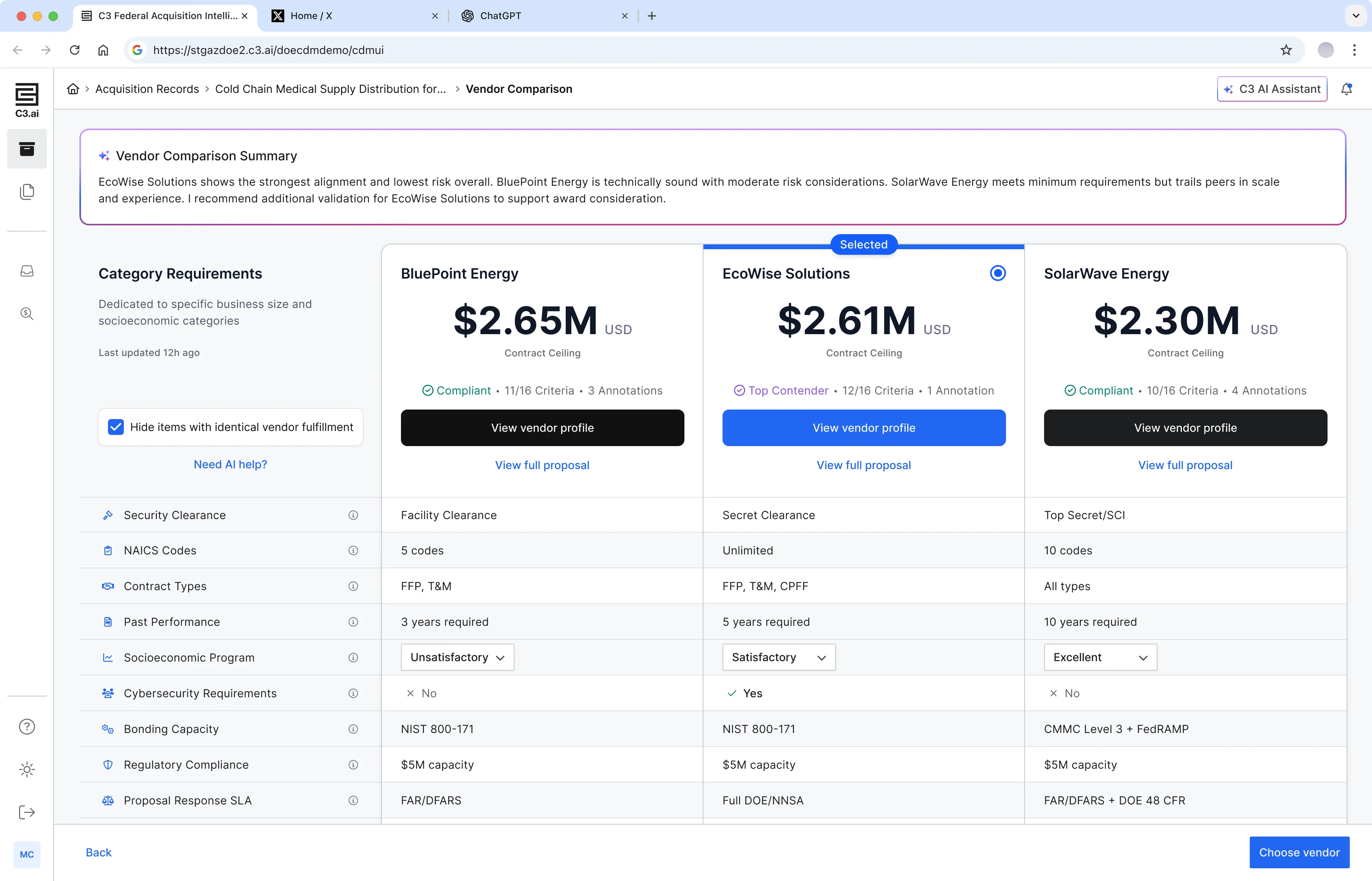
By designing the experience around progressive disclosure, evaluators can move from high-level vendor comparisons down into the exact language that informed each conclusion, which strengthens credibility during leadership review and dramatically improves readiness for protest scenarios. What emerges is not automation of judgment but acceleration of understanding, where AI reduces the mechanical labor of reading and cross-referencing while humans retain authorship of decisions.

Vendor Evaluation — AI-assisted proposal assessment
Click to preview
Acquisition Detail — Source selection documentation
Click to preview

The balance enterprise and public sector environments require.

Federal
Governance & Compliance Built for documentation that can withstand legal protest and audit review
AI-Assisted
Evaluation Platform Role-based workspaces with AI that respects permission boundaries
Defensible
Award Documentation Progressive disclosure preserving lineage from observations to decisions
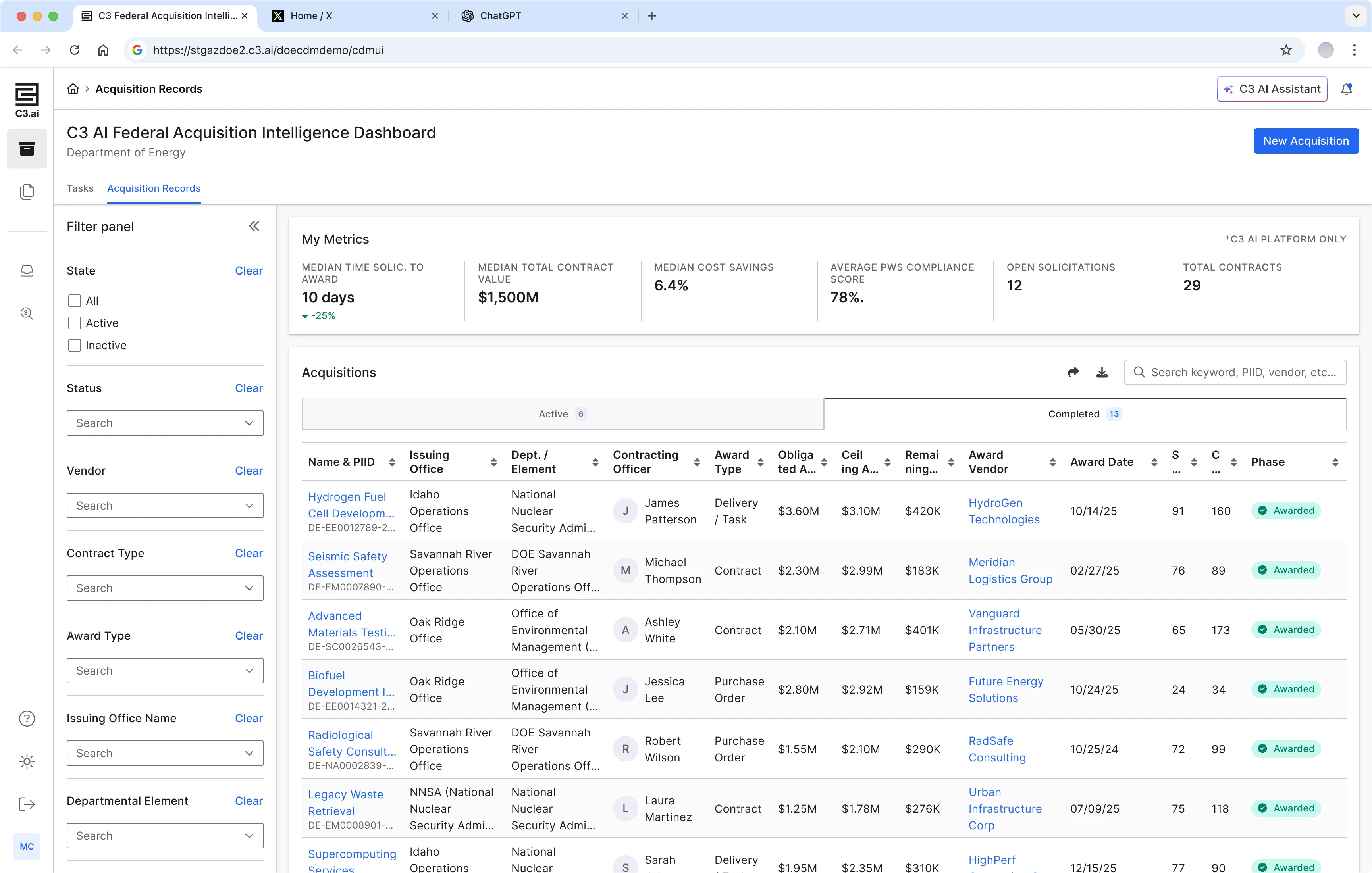
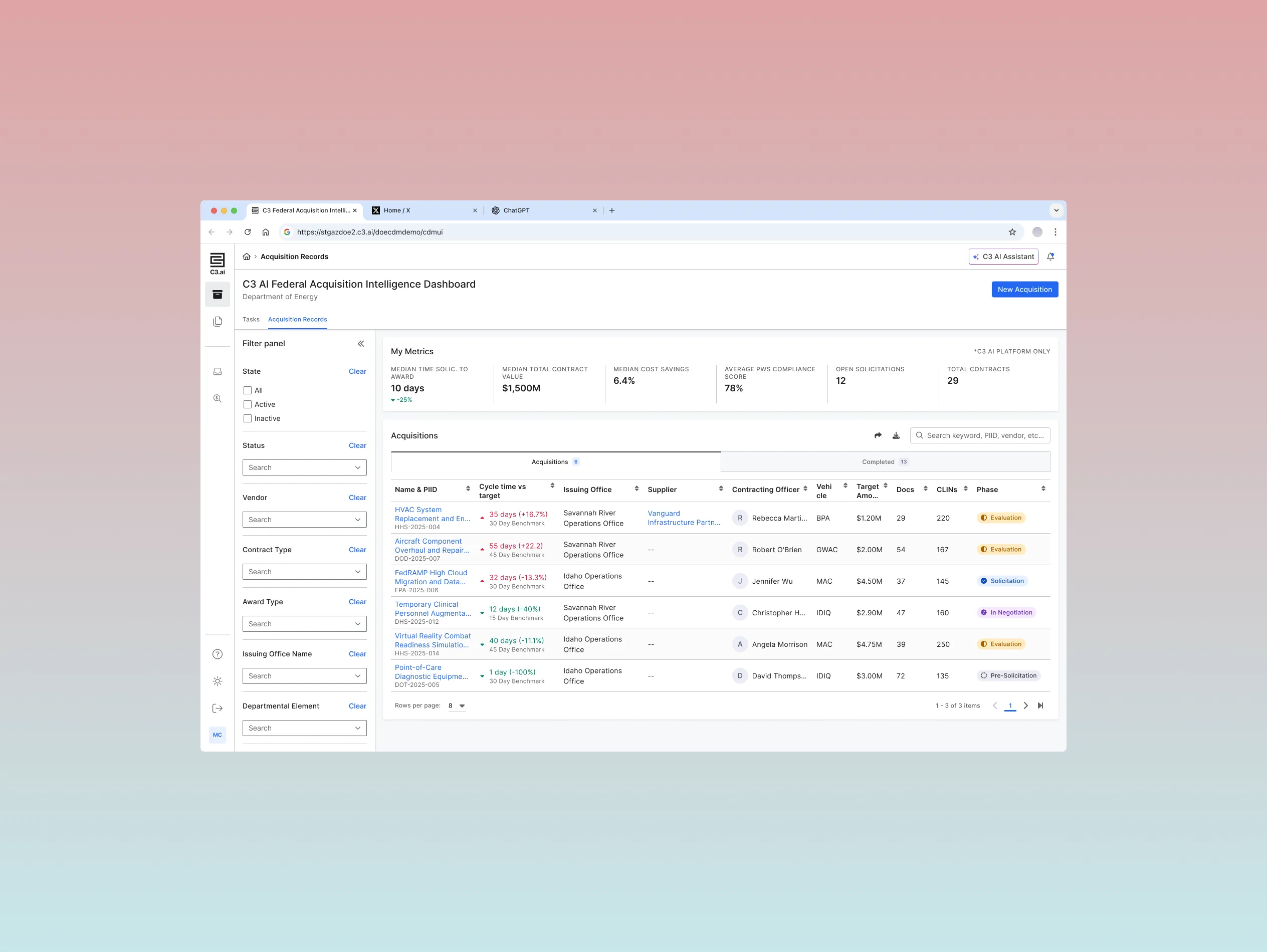
Acquisition Records — Procurement tracking and management
Click to preview

Understanding both the user workflow and the governance environment it lived within.

Lead Product Designer responsible for shaping an AI-assisted evaluation platform for federal contracting, aligning user workflows, regulatory constraints, and enterprise governance into a defensible and scalable experience.

Removed a lot of the mechanical work while preserving the human responsibility to interpret and decide, which is the balance enterprise and public sector environments require.

I worked closely with Product Managers with constant senior stakeholder involvement where priorities and interpretations could change rapidly, and I became the person who could absorb that volatility and translate it into coherent product design.

Over time this approach increased stakeholder confidence in the design function and contributed to stronger positioning in competitive pursuits, because we could demonstrate that our solution understood both the user workflow and the governance environment it lived within.

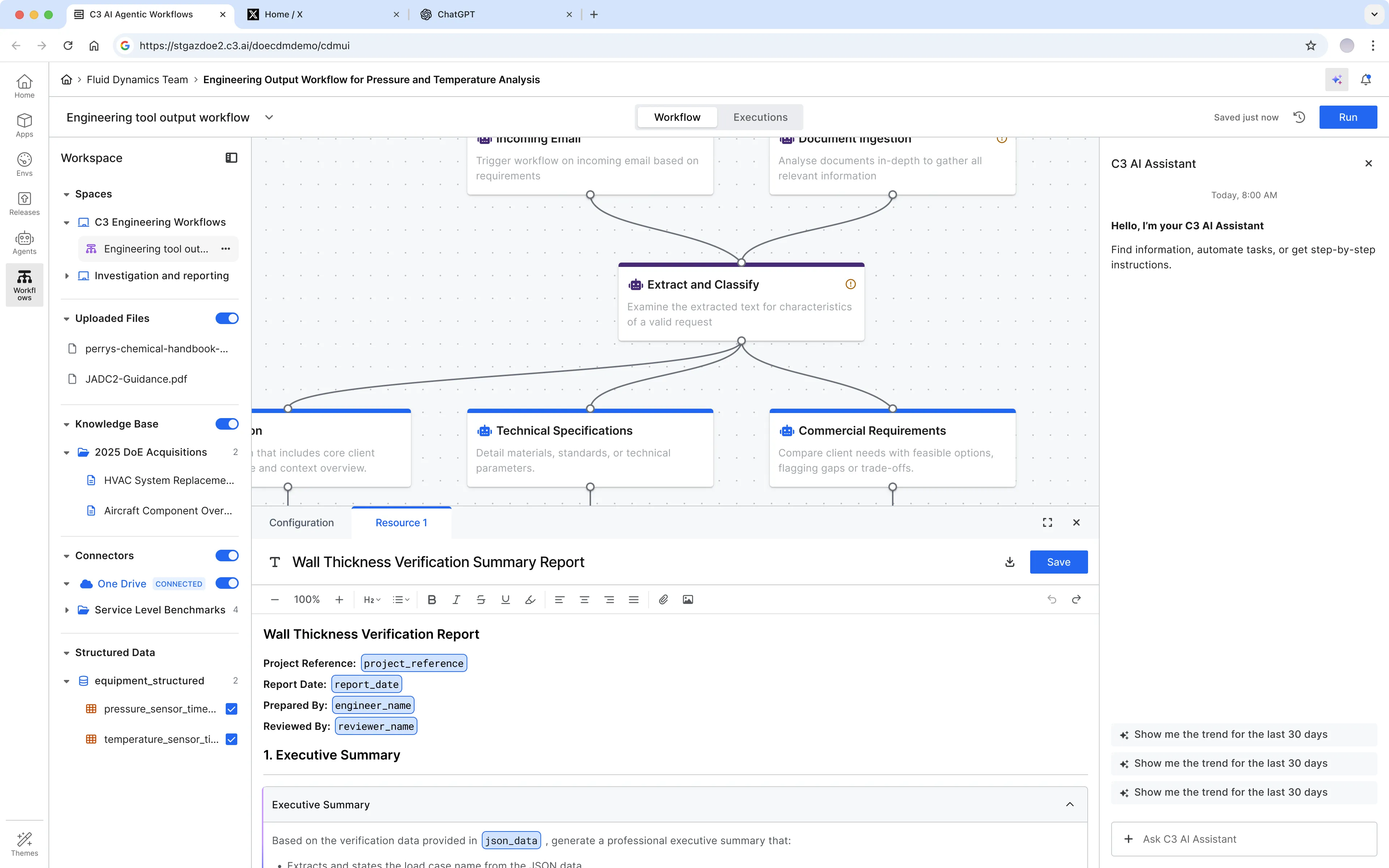
Document Generation — AI-assisted award documentation
Click to preview
Agentic Workflows
Next Project

Agentic Workflows